India
The Steep Cost of a Speedy Delivery
Injuries take place almost every day, along with routine payment glitches.

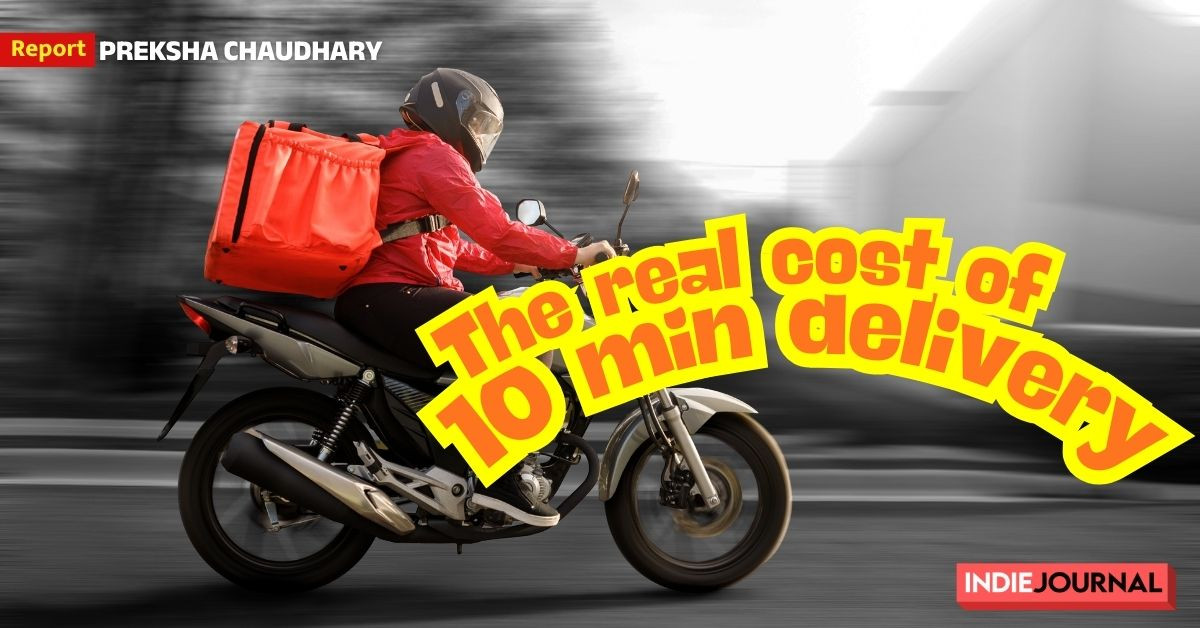
Preksha | Just a turn away from Babasaheb Ambedkar Chowk in Aundh, Pune, Chetan Jagtap (25), an Instamart delivery partner, picked up what should have been his first routine order of the day. While returning to the store post-delivery, his bike collided with a truck. By the nightfall of November 15, 2025, it became clear that he had suffered multiple fractures, leaving him unable to walk for years to come.
Nothing about that day was unusual and that is precisely the point.
At the Swiggy Instamart store, patched together with silver steel sheds, vehicles pull in and out every minute. Every few seconds, a high-pitched ringing fills the open space, alerting partners to new orders. Sometimes, they catch a break between orders to charge their phones on a bench that can seat no more than five people at a time. Opposite this seating arrangement stands a travesty of a toilet, non-functional and now blocked by stacked carts.
28 deliveries.
— Raghav Chadha (@raghav_chadha) December 16, 2025
15 hours of relentless work.
₹763 earned.
This is not a “gig economy success story”.
This is systemic exploitation hidden behind apps & algorithms.
I raised this issue in Parliament recently. Low pay, crushing targets, no job security, no dignity for gig… pic.twitter.com/gLwQbcE1iQ
Another washroom inside the store remains operational strictly for the staff. R.O. water was installed only after the strike. This usual day involves rude behaviour by customers, problems with non-payment of return orders and the mandate to upload a picture on the portal wearing the Swiggy T-shirt, sometimes multiple times a day - this is what fills the day of those now termed delivery 'partners', a term that conveys inclusivity and flexibility but keeps them at a distance.
Chetan had been working consistently at this Swiggy Instamart store for a year. Just before a nationwide strike was announced during the New Year, many Instamart stores in Pune were closed around mid-December. Their demands included the installation of clean drinking water, usable washrooms, order return payouts, among many others, especially in this store, following the incident involving Chetan.
Each 10-minute delivery here could potentially be billed in lakhs. What follows is a bureaucratic maze where the burden of seeking updates, collecting and submitting documents, tracking police reports and calculating hospital bills, as well as the cost of the convenient delivery model, is paid by the individual.
🧵1/ The massive protests & strike by delivery partners of @Zomato @Blinkit
— The Viper King (@viper4s) January 1, 2026
& others demanding fair pay, end to unsafe 10-minute delivery pressures, social security & no arbitrary deactivations expose a grim reality: these are not mere "partners" but workers bearing all risk👇
Swiggy’s policy on its website states: “All our delivery partners on Swiggy get insurance benefits like accidental coverage of Rs 2 lakhs, accidental death and disability cover of Rs 10 lakhs, accidental OPD of Rs 10,000, loss of pay compensation up to three months in case of accident and free, on-demand ambulance service right from their first order. These covers are amongst the best in the industry.”
The ambulance, however, has not yet left the website to reach their doorstep, leaving Chetan and his family constantly planning how to arrange the next trip to the hospital.
“We were promised the successful delivery of all of this in seven to eight days. It has been fifteen days now,” adds Chetan. His mother intervenes: “We know he is in so much pain. But taking him to the hospital will again cost money. We sit with him all day and all night, but cannot take his pain away.” As the need for money mounts now more than ever, how thin remains the line between payment delayed and payment denied?
The manager visited the hospital and his home once. Apart from the insurance payment, the other promised payments have not yet been processed. “Server down,” is the reply they receive from the manager, driving them further into the muddle of tracking payouts, transferred calls and shifted responsibilities. “Itni badi company ka server kitne din down rahega (For how long will the server of such a big company remain shut?),” his uncle, Sharad Gaikwad, adds wryly.
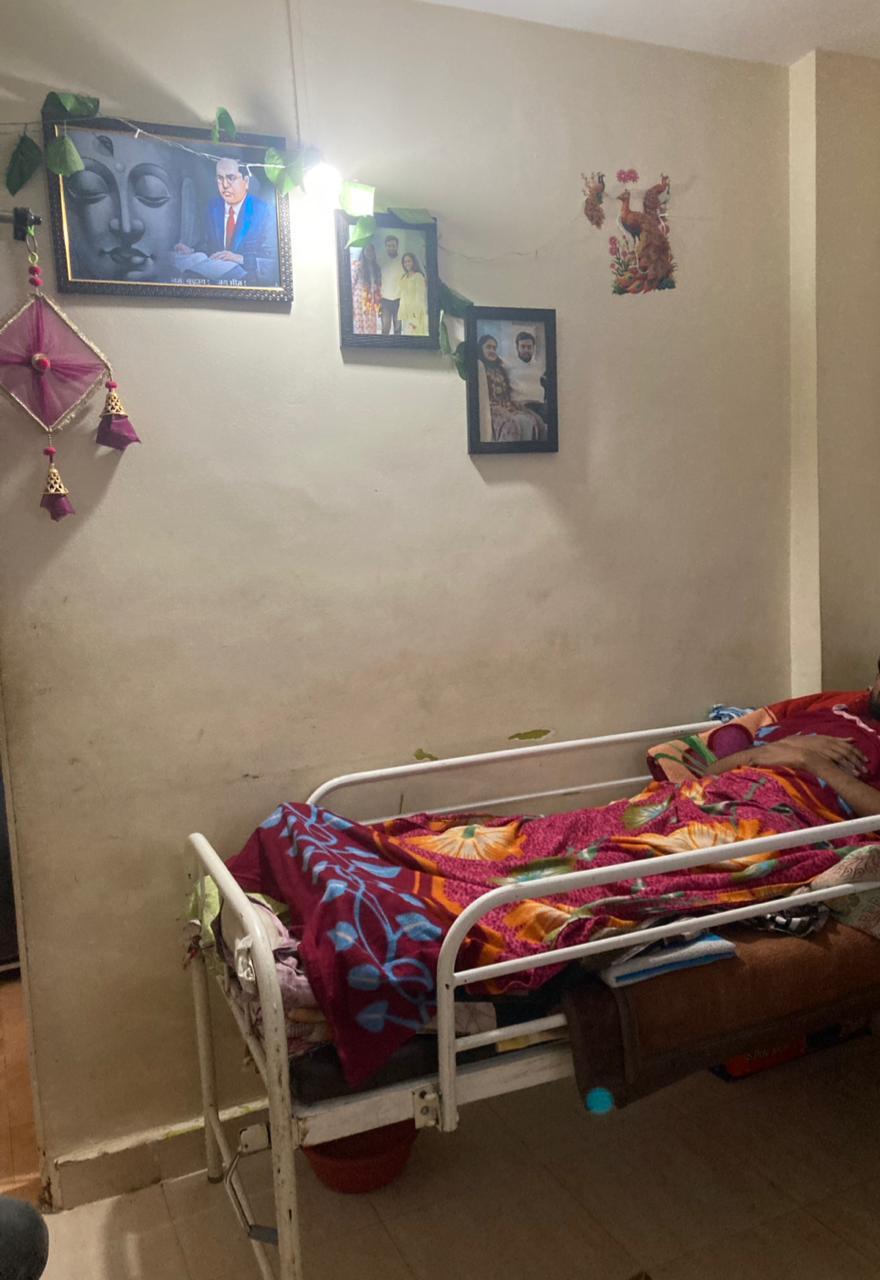
Every eighth day brings a new check-up call, yet the discussion in the living room hangs over the calculated cost, which amounts to Rs 6,000–7,000 every visit. Chetan describes the agonising pain he feels, which makes it impossible for him to rest or fall asleep. His mother, the only one going out to work since the accident, while the rest of the family attends to him. The hospital bill, which exceeds Rs 5 lakhs, has not yet stopped mounting. The insurance payout covered the promised Rs 2 lakhs; the remaining amount lost in the company’s catacomb, pushing them into loans to meet the bills.
“How much can we borrow from people after all?” his mother adds, sitting on the adjacent bed, facing her son.
The police investigation fizzled out. The truck driver, his father said, was free to go. Chetan’s bike was damaged beyond recovery. His family remains burdened with calculations. “If nothing else, had the truck driver even visited us, we would have felt better,” his father adds.
“They are running all day to chase targets. They feed everyone but forget to eat themselves,” comments Sharad, as silence shrinks the space.
Others working at the store speak of injuries and accidents that take place almost every day, along with routine payment glitches, they say that the manager rarely escalates. On payout issues, Manoj*, a delivery partner who works at the same store, reiterates his complaint about an incentive that was not added to his weekly payout. He says he raised the matter with the manager but has received no response so far. Much of what he says is drowned out by music blaring from an election truck making its routine rounds. A long stretch of silence follows before the conversation resumes.
Hello self proclaimed hero dont get offended i got screenshot from zomato rider as a customer i ashamed to know gig workers get 30 rs for 7 kms and 40+min rides and u add user tip as there earning ur wealth will disappear with curses of workers @AdityaRajKaul @shubhankrmishra pic.twitter.com/6GZUrV89x1
— Vivek Prism (@xvivek) January 6, 2026
Nimesh*, 19, a student at a nearby college, talks about the problems he faces with cash-on-delivery orders. Dealing with rude customers often consumes a significant amount of his time. He also speaks about being treated differently when wearing the Instamart T-shirt while riding on the road. He says he avoids wearing it when delivering to IT companies. “It hurts how they look at me when I enter wearing a delivery T-shirt,” he says.
Manoj* goes on to explain the incentive system in detail. Incentives are tied to targets, and a rider cannot reject more than one order during an incentive shift. If rejected, the incentive for the entire day is lost. That is what pushes many to cut corners. Midway through the conversation, Rakesh*, who is sitting nearby, points out a practical flaw, “Sometimes my phone hangs. What am I supposed to do then? My incentive is lost.”
As the companies relentlessly market their quick delivery, how is it that the same speed does not reach their delivery ‘partners’, on whose labour this model stands? While the deliveries are promised and mostly delivered in ten minutes, many, like Chetan’s, run long every day.
All names marked with an asterisk (*) have been altered to protect identities.



